|
Serial No |
Name of equipment |
Make |
Model |
Serial No |
|
1. |
Shimadzu |
1900i |
A125358 |
|
|
2. |
Digital Potentiometer |
Systronics |
9027 |
3202 |
|
3. |
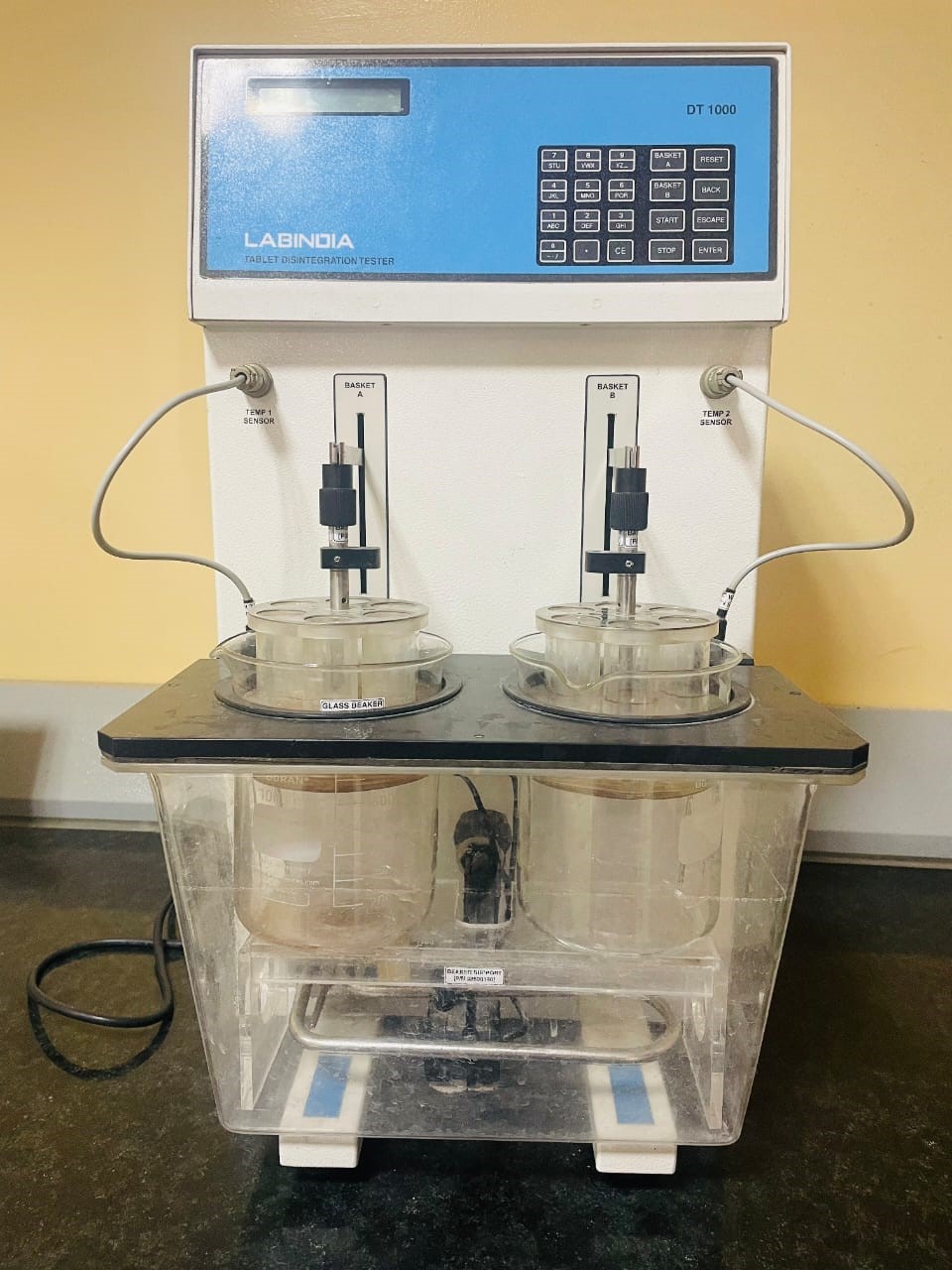
Tablet disintegration apparatus |
LaB India |
DT1000 |
DI1020724 |
|
4. |
Autoclave SS Body |
Yamto |
NA |
NA |
|
5. |
Capsule filling machine |
Yamto |
NA |
NA |
|
6. |
BOD Incubator |
Yamto |
NA |
NA |
|
7. |
Bulk density digital |
Yamto |
NA |
NA |
|
8. |
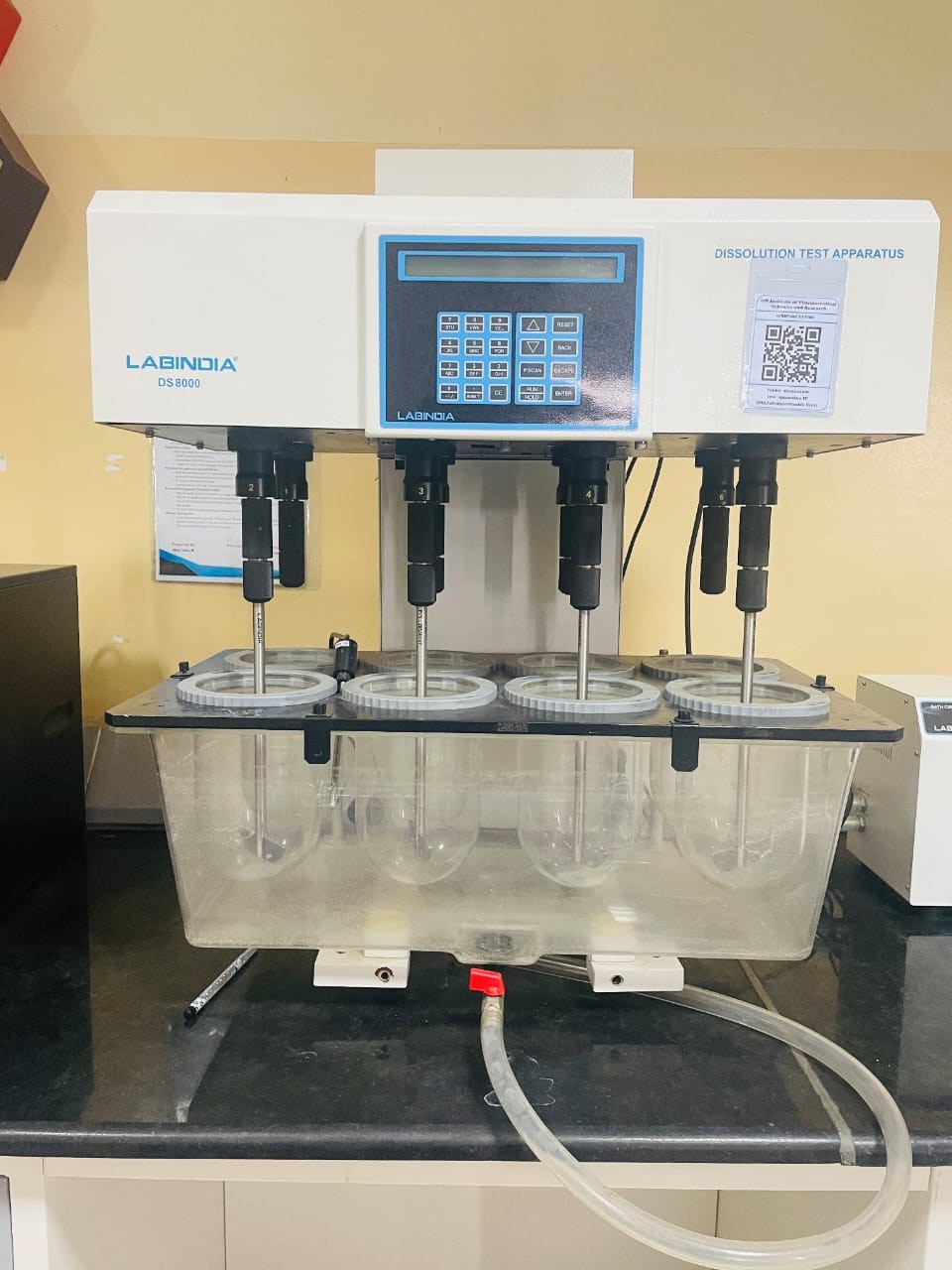
Tablet dissolution apparatus |
Lab India |
DS8000 |
DT19090739 |
|
9. |
Digital pH Meter |
Yamto |
PHS-3C |
267937 |
|
10. |
Rotational Viscometer |
Yamto |
NDJ-8S |
N2112755 |
|
11. |
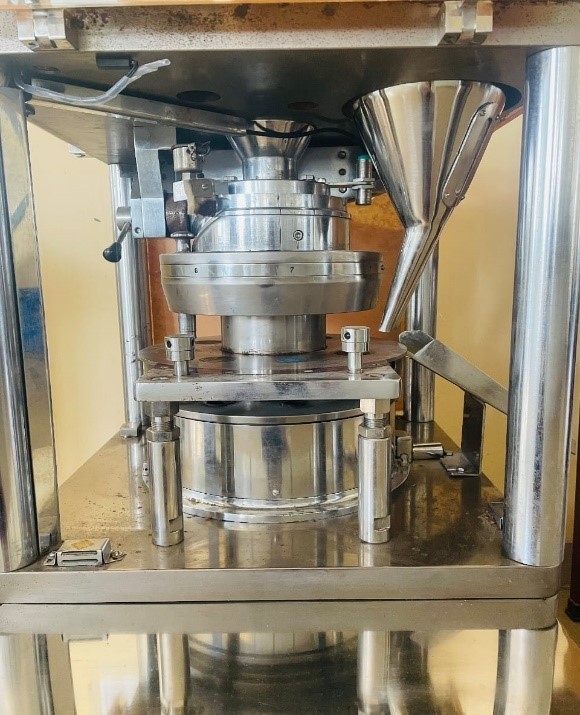
Tablet punching machine |
Medrix laboratories |
NA |
NA |
|
12. |
Digital weighing balance |
Eagle |
PKT40D |
NA |
|
13. |
Tablet friability tester |
Yamto |
NA |
NA |
|
14. |
Digital hot plate stirrer |
Eltek |
M3D |
KKF46 |
|
15. |
Stability chamber |
Yamto |
YIS129 |
NA |
|
16. |
Karl fisher titrimeter |
Yamto |
NA |
NA |
|
17. |
Flame Photometer |
Yamto |
NA |
NA |
|
18. |
Colony counter digital |
Yamto |
NA |
NA |
|
19. |
Biossafety cabinet (Laminar Air Flow) |
Yamto |
NA |
NA |
|
20. |
Muffle Furnace |
Yamto |
NA |
NA |
|
21. |
Nephlo Turbidity meter digital |
Yamto |
NA |
NA |
|
22. |
Medical microsciope |
Yamto |
NA |
NA |
|
23. |
Conductivity meter |
Systronics |
306 |
4831 |
|
24. |
Colorimeter |
Systronics |
9027 |
8968 |
|
25. |
Potentiometer |
Systronics |
NA |
NA |
|
26. |
Digital ultrasonic cleaner |
RoHS |
30 |
NA |
|
27. |
Tablet friability tester |
Yamto |
NA |
NA |
|
28. |
Monsento Hardness tester |
NA |
NA |
NA |
|
29. |
Pfizer hardness tester |
NA |
NA |
NA |
|
30. |
Soxhlet extraction apparatus |
Yamto |
NA |
NA |
|
31. |
Universal Material Testing Machine |
Tec-Sol India |
Tec-Sol TTM500C |
173001-1 |
|
32. |
3D Printing Machine |
Creality |
Ender 3.0 |
P202J11C01109 |
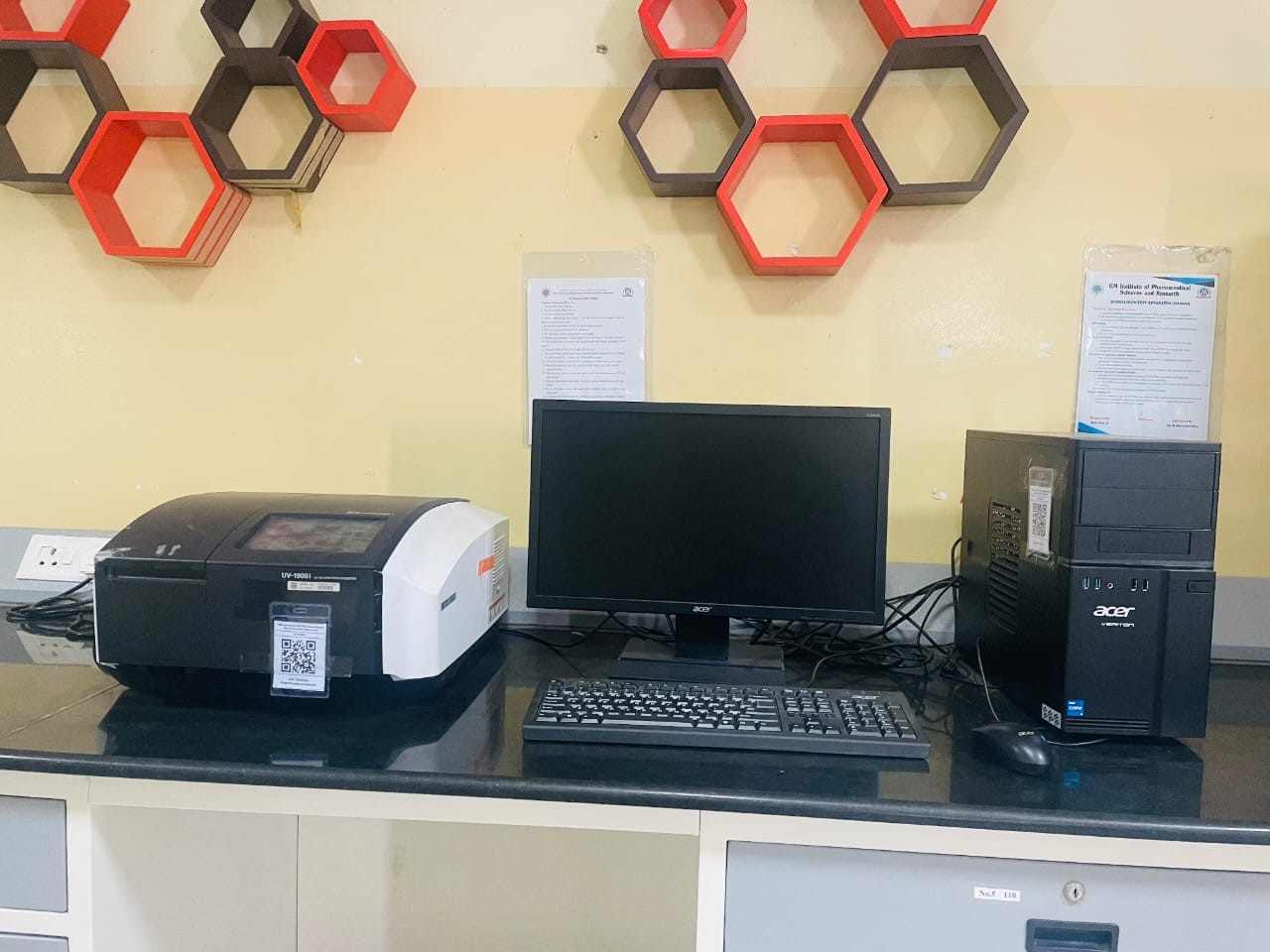
🧪 Uses / Applications:
| 1. Pharmaceutical Analysis | 2. Quality Control | 3. Environmental Testing | 4. Biochemical Applications | 5. Food & Beverage Industry |
| Drug content estimation | Raw material testing | Detection of pollutants in water | DNA/RNA quantification (A260/A280 ratio) |
Color analysis
|
| Dissolution profile studies | Finished product analysis | Measurement of nitrates, phosphates, heavy metals | Protein concentration analysis | Detection of additives and preservatives |
| Lambert-Beer’slaw validation | Validation of cleaning procedures | Enzyme kinetic | ||
| API quantification | ||||
| Stability testing under UV light |
Research and Academia:
Compliance Standards:
Conforms to USP, IP, BP, EP guidelines.
Meets 21 CFR Part 11 (data integrity) compliance.
System Design:
8-station design (6 test vessels + 2 additional for blank/reference or spare)
Individual stirrers/paddles/baskets
Heated water bath with temperature control
LCD screen with a digital control panel
Temperature Control:
Maintains 37.0°C ± 0.5°C
Circulating water ensures uniform heating
Speed Accuracy:
Stirring speed range: 25–250 RPM (±2 RPM accuracy)
Modes of Operation:
Manual, Semi-automated, or Automated sampling (depending on variant)
Data Storage & Reports:
Stores methods, test results
USB port for data transfer
Printer interface for reports
Accessories:
Paddles, baskets, sampling cannulas, filters, etc.
🧪 Common Uses:
Pharmaceutical Industry:
Tablet & capsule dissolution testing
Used for in vitro drug release profiling
Quality control of dosage forms
Stability studies to monitor release behavior over time
Formulation Development:
Compare different formulations (e.g., immediate-release vs sustained-release)
Evaluate effect of excipients on release rate
Bioequivalence Studies:
Predict in vivo behavior by studying in vitro release
Compare branded vs generic formulations
Study kinetics of drug release
Research and Academia:
Study kinetics of drug release
Perform comparative dissolution studies in different media (pH 1.2, 4.5, 6.8, etc.)
Model: Labindia DT 1000
Stations: Dual basket system (Basket A & Basket B) for simultaneous disintegration testing of two samples
Display: LED or LCD digital screen with keypad controls
Complies With:
IP (Indian Pharmacopoeia)
USP (United States Pharmacopeia)
BP (British Pharmacopoeia)
EP (European Pharmacopoeia)
Basket Movement:
Vertical, reciprocating motion at 30 ±1 cycles/min
Heated Water Bath:
Maintains test temperature at 37°C ± 2°C
Integrated temperature sensors (TEMP 1 and TEMP 2)
Timer & Preset Functions:
Automated timing with auto-stop when disintegration is complete
Safety Features:
Over-temperature protection
Auto stop after preset time
🧪 Uses / Applications:
To determine how quickly tablets or capsules disintegrate in a liquid medium.
Essential for ensuring bioavailability of the drug.
Compare different excipients and their impact on disintegration time.
Optimize tablet hardness and binders.
Evaluate effect of storage on tablet disintegration.
Required test for oral solid dosage forms as per pharmacopeial guidelines.
Ensures that tablets from different batches meet disintegration standards.
Manufacturer: Medoft Enterprises (as seen on the label)
Type: Single or Multi-station Rotary Press
Material: Stainless Steel (GMP compliant)
Key Features:
Rotary Mechanism:
Has multiple tooling stations (punches and dies) that rotate to compress powders into tablets.
High Output:
Capable of producing thousands of tablets per hour.
Compression Zone:
Pre-compression and main compression rollers ensure uniform tablet hardness.
Feeding System:
A hopper feeds granules into dies.
Control Panel:
Adjustable settings for pressure, speed, tablet thickness, and weight.
Safety Guards:
Transparent or covered safety shields for operator protection.
🧪 Uses / Applications:
Compresses powder or granules into tablets of uniform weight, size, and shape.
Used in R&D and pilot batches to scale-up production.
Used for Ayurvedic, herbal, and dietary supplement tablets.
Suitable for animal tablets and some industrial pellets.
Can be adapted to different shapes and sizes of tablets with interchangeable tooling sets (B or D tooling).
Stability Chamber